Materials guide and Load tables
Find technical information about the materials used in HangOn products, including temperature resistance, tensile strength and other material properties. Use the load tables below as a guide when selecting the right solution for your application.
Rubber & Plastics
| Characteristics | Silicone rubber | GE Silicone rubber | EPDM rubber | SBR rubber | Natural rubber | Thermoplastic elastomer | Polyamide | Polyamide 6.6 | Polyamide 6.6-15 % glass fibre | Polypropylene | Polyethylene, low density | Polyvinyl chloride, flexible | |
|---|---|---|---|---|---|---|---|---|---|---|---|---|---|
| HangOn | Q | GE | EPDM | SBR | NR | TPE | PA6 | PA6.6 | PA6.6-15 | PP | PELD | PVC | |
| Intermittent max temp (ºC) |
315 | 315 | 125* | 100 | 90 | 150 | 160 | 200 | 240** | 150 | 70 | 150 | |
| Continous max temp (ºC) |
230 | 230 | 100 | 90 | 80 | 135 | 70 | 90 | 120 | 110 | 50 | 100 | |
| Tensile strength (MPa) | 8 | 10 | 12 | 14 | 21 | 8 | 50 | 60 | 100 | 35 | 8 | 50 | |
| Elongation at break (%) | 400 | 500 | 300 | 500 | 500 | 500 | - | - | - | - | - | 20 | |
| Compression set | 13% (22h @ 175ºC) | 25% (22h @ 175ºC) |
20% (22h @ 125ºC) | 20% (22h @ 70ºC) | 20% (22h @ 70ºC) | 35% (22h @ 70ºC) |
- | - | - | - | - | - | |
| Hardness | 30-80 | 30-80 | 40-80 | 40-80 | 40-80 | 50-95 | 70 (ShD) | 80 (ShD) | 90 (ShD) | 55 (ShD) | 50 (ShD) | 70 (ShD) | |
| Alcalis | Fair | Fair | Fair | Fair | Poor | Fair | Excellent | Excellent | Excellent | Very good | Good | Fair | |
| Acids | Good | Good | Excellent | Fair | Fair | Very good | Fair | Fair | Fair | Excellent | Good | Fair | |
| UV | Excellent | Excellent | Very good | Fair | Fair | Poor | Very good | Very good | Very good | Poor | Poor | Very good | |
| Abrasion | Poor | Poor | Good | Good | Excellent | Good | - | - | - | - | - | - | |
| Tear | Poor | Poor | Fair | Fair | Good | Very good | - | - | - | - | - | - | |
| Density (g/cm³) | 1,18 | 1,18 | 1,25 | 1,25 | 1,2 | 0,95 | 1,13 | 1,13 | 1,23 | 0,91 | 0,92 | 1,45 | |
| Water absorption (24h, 20ºC) | 0 | 0 | 0 | <0,1 | <0,1 | <0,1 | 9 | 8 | 6 | <0,1 | <0,1 | <0,1 |
* In powder coating some materials can be used just once, for example EPDM which has a top temperature resistance of 125°C but can actually stand temperatures up to approx. 200°C. EPDM plugs get harder but do not melt.
** Thermoplastics like PA actually start melting at approx. 160°C but can be stabilized in some different ways, for example with a mixture of glass fibres.
Sheet metal
| Characteristics | DC 01 | Ymagine D1 | DX51D Z275 MAC | EN-AW 1050A H14 | EN-AW 1050A H14 | 1.4301 | |
|---|---|---|---|---|---|---|---|
| HangOn | DC 01 | Ymagine | Pre Zink | Alu 1050 | Alu 5005 | Stainless steel | |
| Tensile strength (MPa) | 270-410 | 335-425 | 270-500 | 110-150 | 125-165 | 520-700 | |
| SS | 1142 | - | 1151-10 | 4007 | 4106 | 2333 | |
| DIN | ST12/ST02 | - | DX51D (ST 02 Z) | Al99.5; AA1050-H14 | - | X 5 CrNi 18 10 | |
| W-nr | 1.0330 | - | 1.0226 | 3.0255 | 3.3315 | 1.4301 | |
| EN | EN 10130:2006 | - | EN 10346:2009 | EN-AW 1050A H14 | EN-AW 5005A H12 | EN 10028-7 | |
| AISI | A 366 (1012) 1008 | - | - | - | - |
Wire
| Characteristics | Steel copper drawn | Steel | Spring wire class A (copper drawn) | Spring wire class B (phosphated) | Stainless steel | Stainless steel, acid resistant | Steel zinc-plated | Copper wire (galvanic process) | Stainless steel, high temperature | Construction steel | |
|---|---|---|---|---|---|---|---|---|---|---|---|
| HangOn | A | B | C | D | E | E1 | F | G | H | I | |
| ø-dependent Tensile strength (MPa) | 450-1000 | 450-1000 | 1200-1700 | 1500-2000 | 600-900 | 700-1000 | 450-1000 | 300-400 | 700-1000 | 600-1000 | |
| SS | 1311/1312 | 1311/1312 | - | - | 2333 | 2347 | 1311/1312 | - | - | 2172 | |
| DIN | ST37-2 | ST37-2 | - | - | - | - | ST37-2 | - | - | ST52 | |
| W-nr | 1.0036/38 | 1.0036/38 | 1.0586 | - | 1.4308 | 1.4401 | 1.0036/38 | - | 1.4841 | 1.0841 | |
| EN | 10025 | 10025 | 10016-2 | 10204 | 58E | 58J | 10025 | - | - | - | |
| AISI | 1008 | 1008 | 1050 | 1080 | 304 | 316 | 1008 | - | 314 | 5120 |
Load table hooks

 normal load
Some facts about load capacity
The load capacity of a single hook is dependent on many things, the most important are the material, wire diameter and orthogonal distance. An approximate formula true for a single hook:
Mmax ≈ σs x ø³/99,5e
Mmax = load where irreversible deformation starts (kg)
σs = bending strength ≈ 0,8 x Tensile strength (MPa)
e = distance (mm)
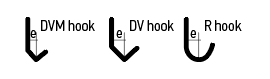
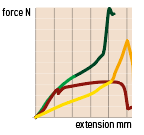
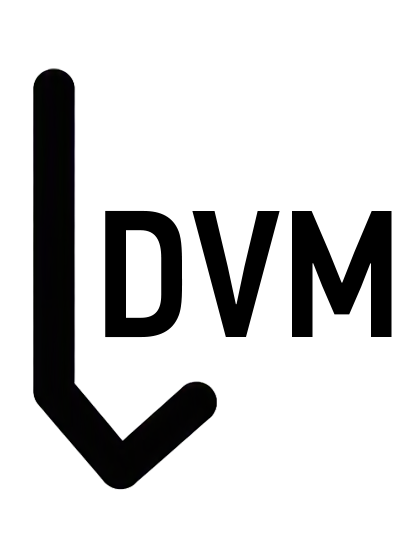
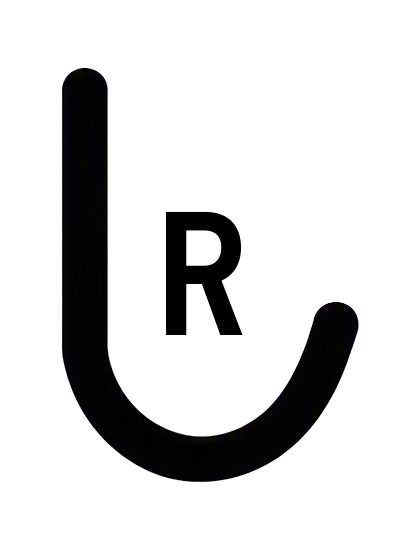
Typical dynamic behaviour of standard hooks when loaded is that maximum load, the load where the wire starts to be permanently deformed (yield stress) is the same for DV and R but approximately double for DV M. Then DV and DV M describe a “concave” load-extension line before the load falls or drops off, while R looks more like a convex figure. Due to the shape of the hook the load capacity after exceeding the irreversible deformation limit and safety margin are very different. R hooks have a low margin and DV much higher. DV/DVM shape is therefore a safer choice.